
Searching for Glass (303)
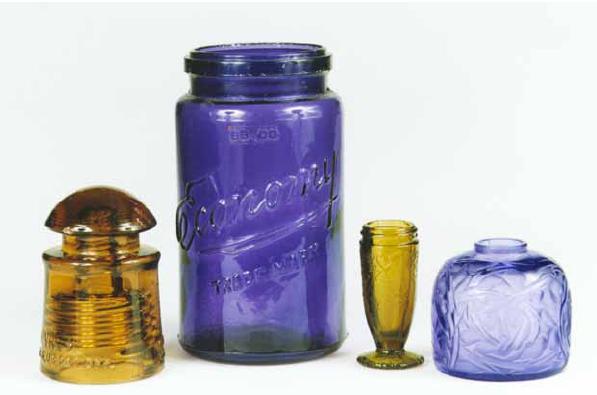
Fakers and forgers are now using a new method to alter the color of antique and collectible glassware. It is called irradiation. Rather than changing the color of an object by covering its surface with paint or some other external coating, irradiation changes glass internally within the very atoms of the glass. Most pieces being altered are genuinely old authentic pieces. Forgers buy these old pieces in the most common and least expensive colors. The pieces are then irradiated to produce rare or unlisted colors which command premium prices.
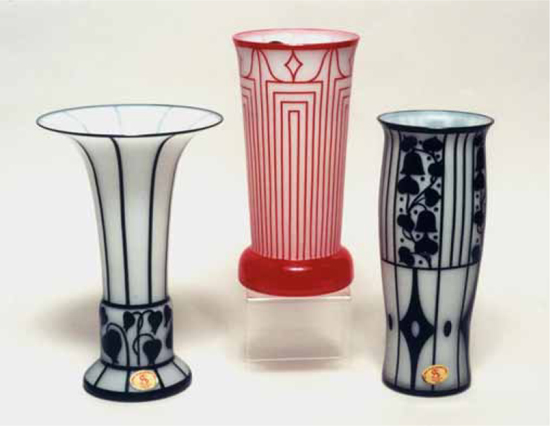
Defining reproduction, replica and vintage glass is a challenge in itself. Identifying it is even more difficult. We use the term replica to describe glass that is a copy of an older design, with no intent to deceive the buyerusually there is some small difference between them. But an uninformed or dishonest seller can pass replicas off as vintage. As Ronald Reagan used to say: Trust, but verify.
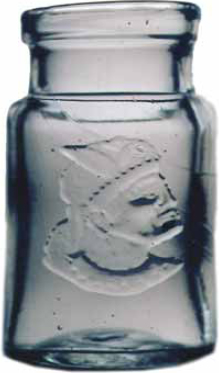
Never heard of Old Sleepy Eye pattern glass? Well, here's a picture of the mold in which the glass was made. But none of the clear glass made in this mold is old. The mold was made sometime in 1972 and used to produce three pieces of clear glass with an embossed portrait of Old Sleepy Eye. The three shapes made were a mold blown 5-inch jar and two pressed pieces (Fig. 4), a 2-inch flat top paperweight and a 4-inch tall, 3-inch dia. tumbler.

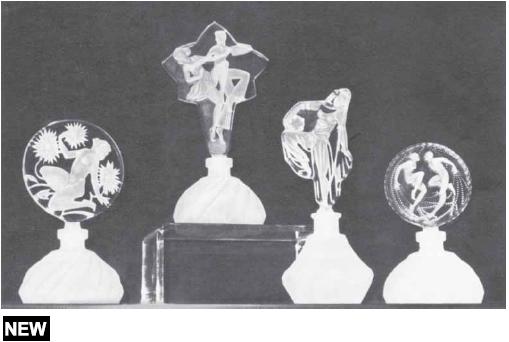
adapted for ACRN from Perfume Bottle Quarterlyoriginal research and text by Madeleine France Donna Sims
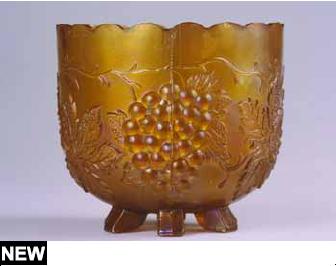
The Grape Delight pattern was made originally by Dugan Glass. In 1975, a nut bowl and a covered butter were reproduced by Mosser glass in Grape Delight. New colors were amber and ice blue.
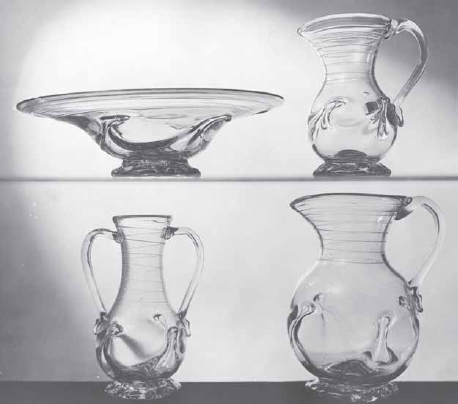
In the 250+ years since Caspar Wistar started the first successful American glass factory in the city of Alloway, the state of New Jersey has been home to over two hundred glasshouses. Many of the names associated with these glasshouses are familiar to collectors of South Jersey glass: the Whitneys of Glassboro, Coffin & Hay of Hammonton and Winslow, and Victor Durand of Vineland, to name a few.
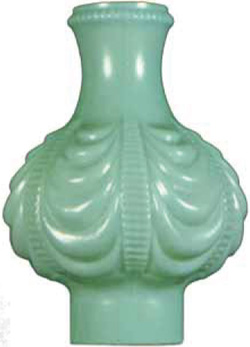
An American lamp parts wholesaler is selling a Jadite version of a Coolidge Drape molded chimney. The new shade is made to fit 2 and 3 burners with a 3-inch fitter. The shade is 9 inches tall and 6 inches diameter. New shades wholesale for $6.25. Although original Coolidge lamps and shade are most commonly seen in clear crystal, authentic Jadite-colored bases and shades were also made.
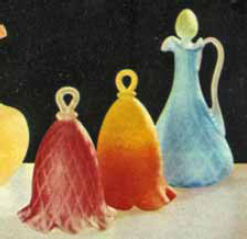
Mother of Pearl (MOP) is so named because of its lustered or "pearlized" surface. It is generally made of three layers of glass: 1a clear outer layer; 2a middle colored layer; and 3an inner casing, usually white. MOP was made by blowing or placing a gather of glass into a mold to give the gather a raised pattern. This was then dipped into or rolled over the clear glass. The clear layer runs across the top of the raised pattern, trapping air in the gaps below. These trapped pockets of air reflect and spread light back through the outer surface to give MOP its glowing pearl-like luster. Some variations of MOP also used heat sensitive glass for special effects. The MOP process was patented in America and England by different companies but the technique was used widely throughout the glass industry in the USA and abroad.
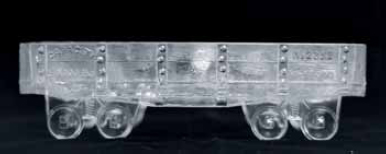
The original railroad gondola car, Fig. 2, is an open dish made of pressed glass. Originals were available in clear, blue and amber. Bess Lindsey lists it as Figure 4139 in her book AmericanHistorical Glass. The fake in clear glass, Fig. 1, appears to be identical when viewed in profile but differs under close examination.