
Searching for Porcelain & Pottery (138)

The so-called "Delft" plaques and plates like the ones in Figs. 1 & 2 can be found everywhere. From booths in "quality controlled" paid admission antique shows to displays on the hoods of pickup trucks near goats and pumpkins at flea markets.

Six new majolica pitchers have recently been introduced by a New York based importer. They range in height from 5-6 and are decorated in period colors of bright blue, green, mauve, rose and yellows. Like original Victorian majolica, patterns of the new are also based on motifs from nature. These include a heron, flowers, ferns and snail shells. New pieces are slip cast and have holes on the inside where handles join the pitcher.
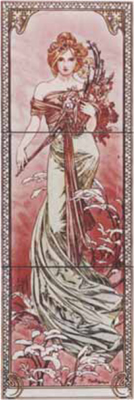
Including Exact Copies of 19th Century Designs with Dates and Signatures

Hall China has recently begun reissuing a number of vintage designs from the 1930s whose original counterparts are highly sought after collectibles. Hall china - donut teapot, ball pitcher, Riviera picture, Nautilus. New pieces - Bain Marie jars, owl, duck.

The latest Nippon reproductions to hit the market are much more difficult to identify than previous fakes and copies. Many new pieces are now direct copies of old shapes and original patterns. The vast majority of previous reproductions carried look-alike Nippon marks that were relatively easy to identify and warned buyers of an items recent manufacture. Japan

A fantasy Limoges backstamp has just starting appearing on porcelain reproductions made in China. The new backstamp, is in gold.
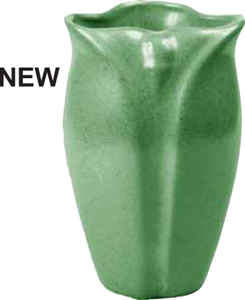
For the last two years, Arts and Craft styled green glazed Teco and Grueby pottery have been bringing record prices. A 6 Teco vase (Fig. 9) brought $19,550 at Christies 20th-century auction in November 1999. Single color Grueby has been selling for $2,000-$5,000 (two color pieces have sold as high as $34,000).

More new marks on blue transferware can be found on the market. The new mark in Fig. 2 is the only one of the three shown that is a direct copy of a known original company, T. Rathbone Newfield Pottery, Tunstall, England. We couldn't find any old counterparts to the new marks in Figs. 5 and 6.
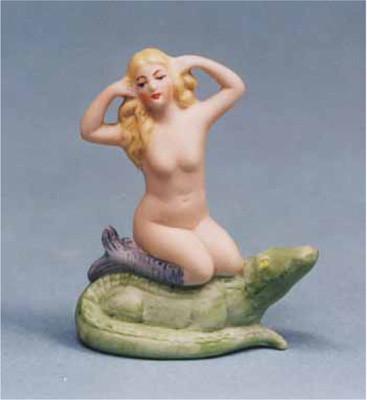
The German Doll Company, owned by American and German partners, has purchased an estimated 30,000 original molds used to make bisque figures during the late 19th and first third of the 20th century. A number of old molds have been put back in production making new pieces that include original pre-1940 marks.
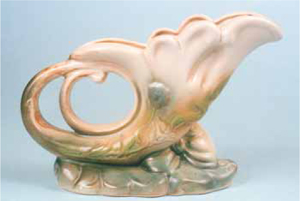
The Hull Bow-Knot 7 cornucopia is being reproduced (shown above). Original Bow-Know was only made in two color styles: 1) pink top rims with blue-green bases; 2) blue top rims with blue-green bases. Reproduction shown here has gray top rim with green base. This reproduction was marked the same as an original with molded raised lettering. Inn