
Searching for Porcelain & Pottery (138)
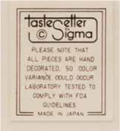
We recently bought this matched set of figural Deco-looking bookends at an antique mall. They are molded ceramic with a white glaze; 6 tall by 4 wide. The only mark is a removable 'Made in Japan' paper label with the copyright of Sigma Taste Setter. Neither retail or wholesale source is currently known.
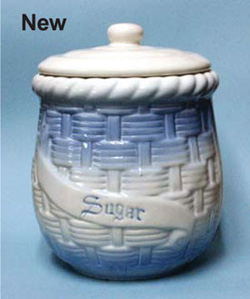
Most pieces of new molded stoneware have been relatively simple shapes such as pitchers, bowls and mugs. Recently, a more sophisticated imitation was made as a complete set of kitchen canisters.
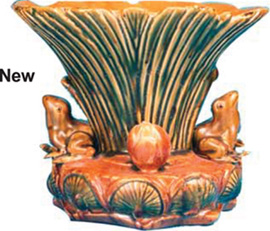
At least one well known Weller Pottery Coppertone shape is being copied. The new vase in Fig. 1 with figural frogs and lily pads was purchased recently at a retail store for $16.99. It was obviously copied from the original ca. 1920-30's Coppertone vase in Fig. 2. Originals have sold for $500 to $1000+ depending on glaze, marks and artist signatures.

The first reproduction of Wedgwood's Victorian era pineapple and fruit majolica umbrella holder was shown in ACRN, October, 1996. Now another copy has been made in the same pattern with some improvements.
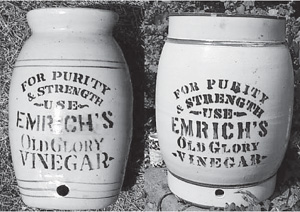
Reproductions of a scarce stoneware vinegar jar are being sold in Missouri. Both jars have For Purity Strength Use Emrichs Old Glory Vinegarin cobalt blue stenciling on white glazed stoneware.
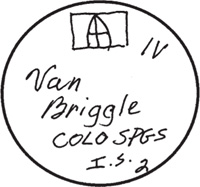
Most collectibles have some means of identification: factory mark, catalog shape, reference books, specific finishes or color. Van Briggle Pottery, however, often requires a close examination of more than just one characteristic.
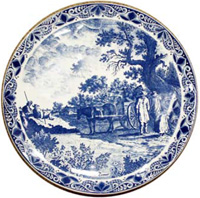
Delft has been a standard inventory item for reproduction wholesalers and importers for years. Many pieces have remained unchanged in their catalogs since the mid 20th century. Many new pieces carry confusing marks that seem to suggest age and qualty.

Emphraim Faience Art Pottery, founded in 1996, specializes in making new pottery in the styles and colors of the Arts and Crafts period. The majority of the company's first pieces were based on copies of well-known period makers such as Grueby, Newcomb Saturday Evening Girls (SEG) and others. Later designs, though, have focused on contemporary interpretations of the general Arts and Crafts style.
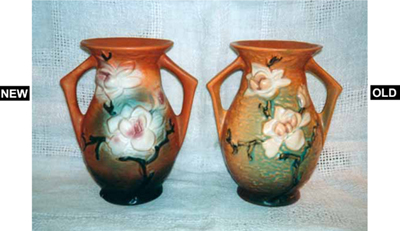
Copies of Roseville art pottery vases marked like originals began appearing in the American market in October 1996. Two of the frist confirmed patterns reproduced were Magnolia and La Rose.
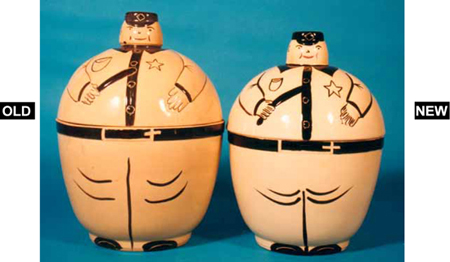
Original Watt Pottery cookie jars have been selling in the $1,500 price range for years. The earliest confirmed reproductions date to September 1996 but may have been available earlier. Distribution of this fake followed the pattern of earlier Watt Pottery reproductions. They showed up first in New England states including the Brimfield markets, then locations in the south east such as Spartanburg, South Carolina. Wholesale prices to dealers were about $60; the fakes sold to unsuspecting collectors for around $500 each.