
Searching for Glass (303)
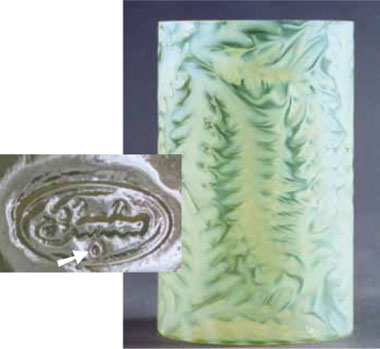
Fenton Glass Co. continues to expand the number of colored glass pickle castor inserts it has in production. The latest pattern to be made is Fern in vaseline opalescent. Although all Fenton products are advertised as being marked in the glass, this example is the only insert of over 20 ACRN has examined that has had the mark. It has the Fenton oval with the decade mark of 0. (9=1990 to 1999, 0=2000 to 2009, etc.).
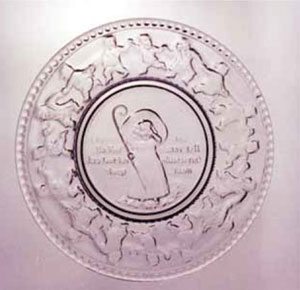
Some items have been so widely reproduced that the copies far exceed the number of originals.
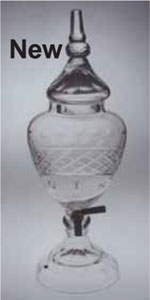
Reproduction cut glass urns with various liquors etched on the front were first reported in the June issue of ACRN. At that time, the only similar originals known were cut glass wine urns. Since then, we have found additional authentic pieces of similar shape with enamel decoration (see photo above right.)
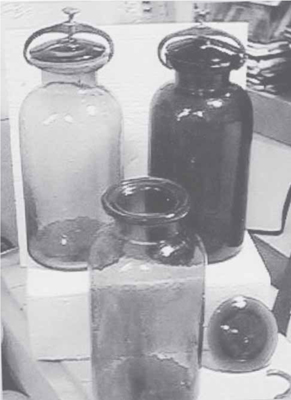
Millville Atmospheric Fruit Jars are among the rarest and most expensive glass jars. Last summer, a cobalt blue quart-size Millville brought $24,200 at a Norman C. Heckler auction in Connecticut. Another Millville at the same auction, an amber half-gallon, sold for $11,000. New jars very similar to the original Millvilles are now reproduced and being sold for $25.
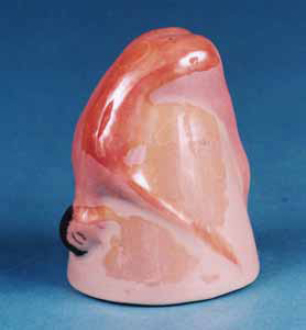
This piece is a reproduction of the classic McKee glass Bottoms Up tumbler. It is ceramic but shows the same nude female figure draped over the tumbler. The nude is flesh colored, the background is offwhite. It has an all over pearlized luster finish similar to Deco era Noritake. No mark of any kind. Patent number 77725
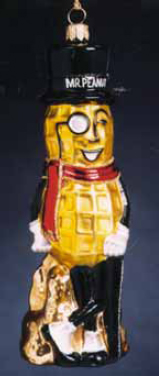
If you havent already noticed, figural blown glass Christmas tree ornaments are enjoying a comeback. Originally made ca. 1870-1940, new thin walled mold blown glass ornaments are again big sellers. Many new comic character ornaments are being made including Betty Boop, Popeye, Felix the Cat and others. Even advertising trademark figures are being produced like Mr. Peanut. Average retail prices for the new ornaments range from $15-$50. Original figures are $150-$500.
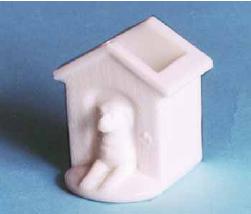
This dog house match holder was originally made by Westmoreland Specialty Co. in the early 1900s. It was in production off and on until Westmoreland closed in 1984. In the late 1980s, the mold was acquired by Summit Art Glass Company which reproduced the piece in a variety of colors. Until late summer 1997, the dog house had not been reproduced in milk glass. Now the piece is available in opaque white for 5 each.
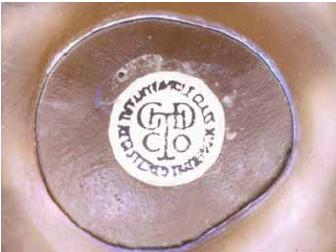
Several pieces of new iridescent glass recently showed up at an auction gallery with faked Tiffany paper labels see Figs. 12 above. The two pieces with the paper labels were among a group of four pieces all of which had faked and forged Tiffany marks. The group was attempting to be consigned by one person. All items were rejected by the auction gallery. How can you tell old from new Here are some hints and clues.
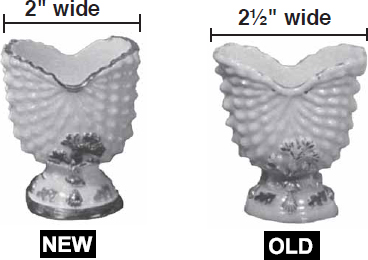
Custard glass is a creamy pale yellow opaque glass (mostly pressed) made primarily in America, ca. 18951910 then again as kitchen glassware, ca. 19301950s. The leading company was Northwood but custard was also made by Heisey, Tarentum, Dithridge, U.S. Glass, McKee and others. Victorian pattern custard has been reproduced for years but a few simple tests will help you avoid the majority of fakes.
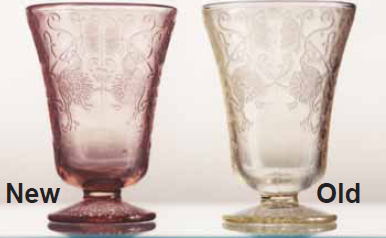
(Poppy #2)