
Searching for Glass (303)
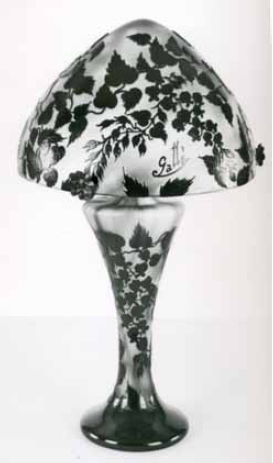
Most reproduction cameo glass produced in the early 1990s was made by sandblasting. The vast majority of vintage cameo glass made during the late 19th century through the early 1930s was made by acid etching.
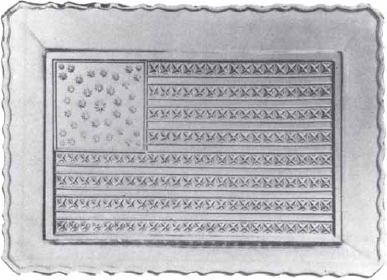
The original American Flag bread platter is thought to have been designed for America's Centennial Exhibition of 1876. It is made in clear pressed glass and measures 11 × 8". There are seven rows of stars and six solid stripes which represent the 13 original colonies. The cluster of 38 stars in the upper right represents the 38 states belonging to the Union at the time the platter was made in 1876.
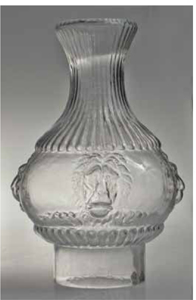
New glass chimneys with molded patterns and designs are being imported by an American lamp parts wholesaler. The new pieces are mouth blown in China. Wholesale prices for the new chimneys are $8 to $12 each.
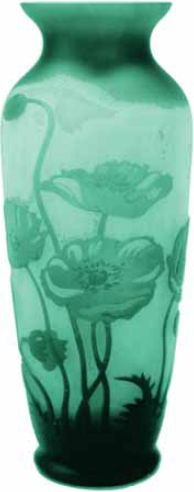
In the early 1990s, new cameo glass marked Galle began to be made in Taiwan. Some Galle signatures on the Taiwan reproductions are very similar to signatures found on vintage pieces; other new marks are fairly obviously fakes. Typical signatures found on the Taiwan cameo is shown on the next page
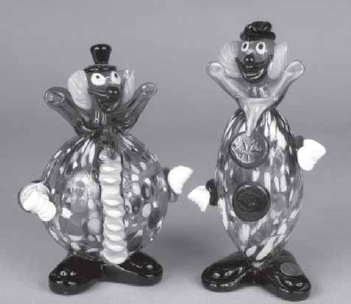
New Venetian Glass Clowns are arriving that can be confused with vintage 1940-60s Venetian clowns. These new clowns are also made in Murano but have hollow bodies. Most all vintage Venetian clowns have solid glass bodies. (Poorly made Mexican clowns also have solid bodies but are very crude and have an aqua tint to the clear glass overlay). The sample clowns ACRN bought had red and gold "Made in Murano" stickers and a company sticker shown above printed in black on clear plastic. ACRN paid $18-25 for new 4-6" clowns.
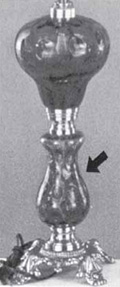
(it doesn't mean broken)

The name Gillinder has been associated with American glass since 1861 when William Gillinder started a glass factory in Philadelphia, Pennsylvania. William and his descendants designed and made some of the most popular pressed glass patterns of the Victorian era and early 20th century. These include: Westward Ho (Pioneer), Classic, Liberty Bell (Centennial Pattern), Holly Leaves and Stippled Star.
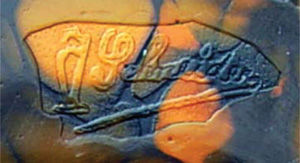
Schneider Glass was a French glass firm founded by brothers Ernest and Charles Schneider. The business made decorative glass from 1917, the year it was founded, until 1932 when it went bankrupt. After World War II, Schneider descendants of the original founders made clear crystal under the Schneider name until 1981.
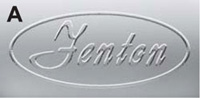
New glass rolling pins identical in shape to those produced by McKee Glass during the Depression era, are being made in the original McKee mold by Fenton Art Glass.
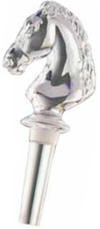
The present day company of Villeroy Boch has introduced a series of crystal wine stoppers. Stoppers are a decorative way to cap a bottle of wine at the table after the cork is removed. The horse head shown here is about 3 long. Other stoppers, mostly in geometric shapes, are 3-4 long. All the new stoppers are under $10 each. New stoppers fit a number of vintage decanters, cruets and perfumes.