
Searching for Collectibles (403)
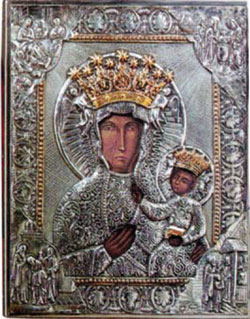
There continues to be no shortage of new Russian icons to go around. Many new pieces are now copying specific well-known originals.
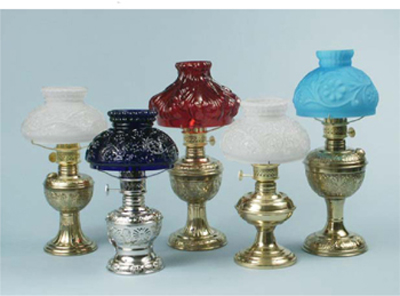
An American lamp supply company has just brought out a line of new brass miniature oil lamps. Although the new lamps arent copies of specific old originals, they do resemble vintage miniature oil lamps in general.
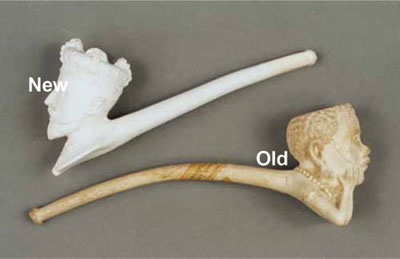
Clay was the most common material for tobacco pipes from the 16th century to the early 1900s. Molded clay pipes representing historical and political figures, animals, occupations, fraternal symbols and other decorations were at the height of popularity between the mid-1800s and 1900. As cigarettes and briar pipes became more popular, the use of clay pipes declined and were rarely used after 1920.
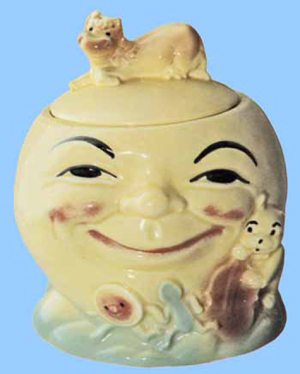
The rapidly escalating prices of cookie jars has brought many reproductions on the market.
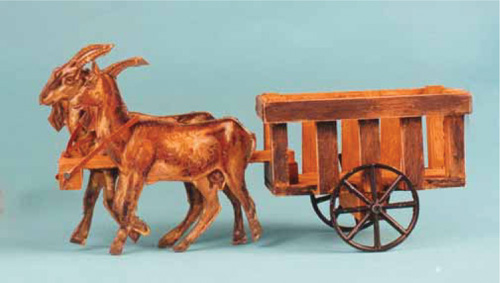
Some of the most colorful original Victorian toys are made of wood covered with lithographed paper. Commonly referred to by collectors as litho over wood, this category of toys is highly prized for its bright colors and folk art appearance.
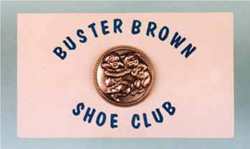
Metal pins first issued in the 1970s which feature Buster Brown and Tige are being soldered to hatpins, toothpick holders, napkin rings and other objects. Such objects with recently attached pins are then represented as vintage advertising pieces. Faked pieces have been bringing fairly substantial sums. A hatpin (Fig. 3) made with one of the 1970s pins recently brought $75 in an on-line auction.

In many cases, factory produced reproductions are made in such large numbers that their sudden appearance alone is often enough to make buyers suspicious. Most are relatively easy to detect after they are publicized.

A collector recently notified ACRN about reproduction Hull Pottery wall pockets. The collector had two new pieces in his possession and reported seeing many more in the Pennsylvania, New York and Maryland area. New and old can be separated by the mark on the back. The authentic Hull mark is formed with block style lettering. The new mark is a cursive or script style lettering. The same new mark also appears on reproduction 10 orchid pattern vases (see ACRN Dec 1999). Differences are most obvious in the double Ls. Script-style marks were used on some Little Red Riding Hood items but never on floral pattern lines.
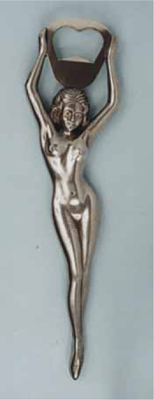
Figural bottle openers became collectible as twist-off and pop-top containers replaced bottles sealed with metal caps. The majority of authentic collectible bottle openers were made between the 1940s and mid-1960s. Even though original openers are not especially old, they have been popular targets of reproduction importers. Three of the most recent copies are shown here.
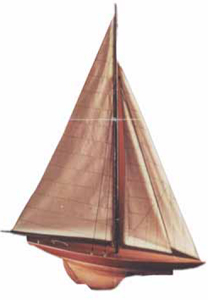
made in China and Indonesia