
Searching for Collectibles (403)
Working bits and pieces of wool and cotton scraps into rugs and other utilitarian objects was a popular 19th century American folk art. Most persons are familiar with such work generally called hooked rugs, but the work can also take form other than rugs.
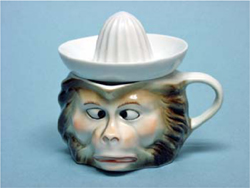
This figural monkey lemon-size reamer from an original German mold is one of the latest releases from the German Doll Co.(GDC). This company owns several thousand original molds and has been putting selected items back into production since early 2001. New products made so far include a wide variety of ceramic bathing beauties and mermaids.

This new nine-inch sculpture sold through a mail-order gift catalog is much better quality than bronze look-alikes offered by reproduction wholesalers. Most inexpensive reproductions are actually made of iron with a painted patina. This piece is solid brass with a genuine patina; that is a surface color produced by treating the surface with chemicals and heat. We found our sample offered at $45 retail.
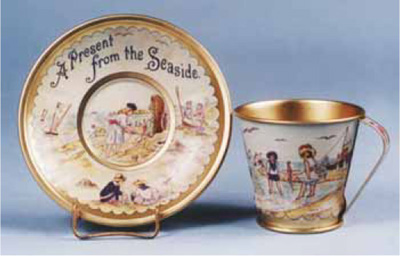
This new tin cup and saucer are copied from a turn-of-the-century original. The cup is titled, A Present from the Seaside. Gold colored tin is printed with full-color images of Victorian children playing at the beach. Scenes include building sand castles, wading in the surface, playing with toy sailboats, etc.
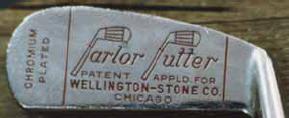
One of the more interesting golfrelated collectibles is a floor stand used to practice putting. Depending on make and condition, an original parlor putter can cost 8001500; original putters add 150250 each. Due to the scarcity and high price of authentic pieces, several reproductions have been made to meet the demand. Originals date from the first quarter of the 20th century. They were made in brass and cast iron with painted details. Paint can be restored and repaired so it is best to look at the construction to determine age.
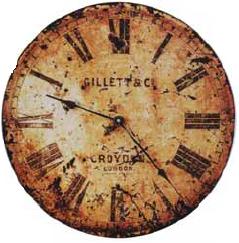
There are currently previously unseen styles of reproduction clock faces entering the market. These new clock faces are high resolution images printed on paper and mounted on whats commonly called fiber board one brand name of fiber board is Masonite. Unlike normally accepted replacement faces, these new faces are heavily aged and distressed with an antique finish. All of the reproduction faces on fiberboard ACRN has seen were copied from old faces that were almost always originally on metal. The fiberboard is proof enough that the face to which it is attached is new.
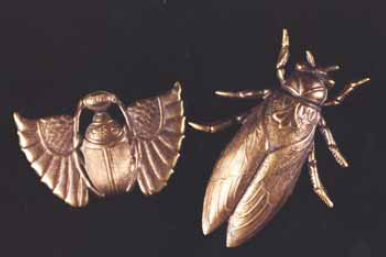
A whole series of new brass stampings is being offered in Art Nouveau and Art Deco designs like the two shown above. All are hollow backed, finely detailed and have a dark antique patina. The pieces are sold without hardware of any kind but we suspect they will begin turning up as brooches, hatpins, stickpins etc. Wholesale price, $1 to $2 each.
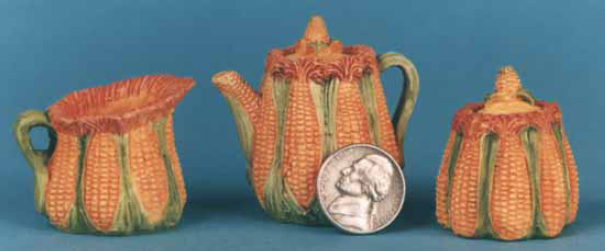
A plastic resin that can be finished to look like antique pottery is now being used to make reproductions of toy and chil-dren's dishes.
In theory, one of the easiest ways to catch fakes, repairs and reproductions is to compare the material a suspect is made of to the material from a known original. But who of us can say if the wood in that mahogany table is Swietenia, central American mahogany as used in early American furniture, or made of Shorea, Philippine mahogany and a present day reproduction?
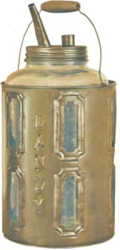
This new 13-inch kerosene jar is copied from a vintage original. The name Dandy is embossed in raised letters in the metal shell. Inside the shell is a glass jar. The open panels in the shell allowed the user to monitor the level of kerosene and refill as needed.