
Searching for Collectibles (403)

This cast iron figural bottle opener is new. It is a copy of an original opener made by Wilton Products of Wrightsville, Pennsylvania. The reproductions are made in China. Originals are among the harder to find figural openers and are highly sought after by both black memorabilia and opener collectors. The new piece is has a distressed finish with discolorations and paint flakes to imitate age.
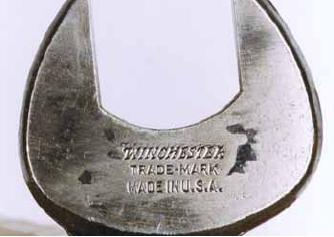
At the end of World War I, the Winchester Repeating Arms Company was looking for new consumer products to maintain war time production levels. The company wanted items that could be produced with the same workers and equipment previously used to manufacture guns and ammunition. Among the new product lines selected was an extensive range of hand tools see background article page 7.
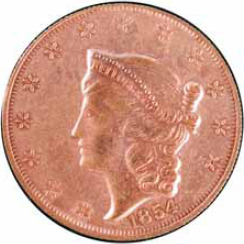
Coins have been forged and counterfeited for thousands of years. Counterfeiting is different from forgery in that counterfeiting usually refers to making copies of currency or coins which can be passed for their face value among the general public. Forgeries and fakes, on the other hand, are created to fool or deceive only a small segment of the public, the coin collector.
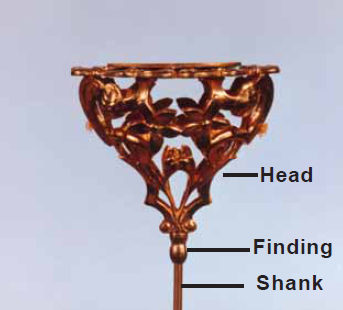
A new hatpin with a powder compact top was recently featured in Points the newsletter of the International Club for Collectors of Hatpins and Hatpin Holders. Founder and editor Lillian Baker forwarded the photos and information to share with ACRN readers.
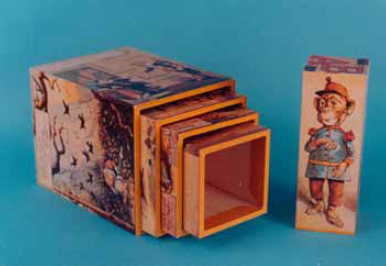
This new stacking, or nesting, block set is an exact reproduction of an 1888 set made by McLoughlin Brothers of New York. Original blocks were wood covered by brightly lithographed paper. This new version is also made with paper applied over wood. An advertisement for the blocks says, "Their production duplicates the original blocks with photographs taken from the original lithographs and applied with wheat paste over cut plywood." Children's toys.
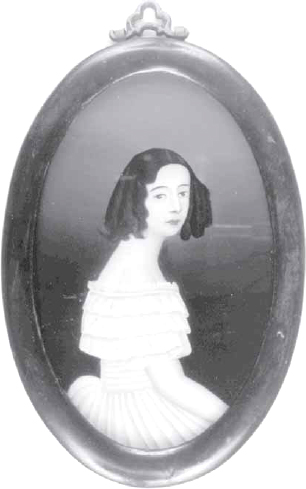
Reverse paintings on glass that imitate early American and Victorian styles are now reproduced. The paintings are done by hand in China and distributed in the United States by gift and antique reproduction wholesalers. If you deal or collect authentic paintings, you can probably identify these new pieces by technique, paint colors and artistic skill. But for many of us, the easiest way to detect them is by examining the frames they come in and the glass they're painted on.

The flapper girl look of the Art Deco period has been popular since it began after WW I. That popularity has apparently inspired a series of Deco figural lamps.
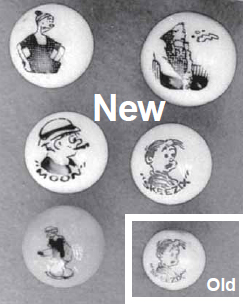
The only vintage comic character marbles were made by Peltier Glass ca. 1920-30's on a 5/8" diameter marble. New comics are on marbles 3/4" dia. and larger. Original marbles have a fired decoration which cannot be felt with a fingernail. Images on new comic marbles are decals or silk screened images which can be felt with a fingernail. If the comic figure is in colored ink, it's new; if the comic is on a solid colored marble, it's also new.
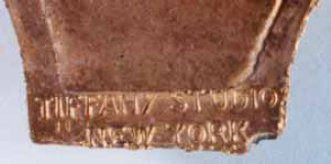
In the late 1960's, a large number of brass belt buckles began appearing carrying the Tiffany name in a variety of marks which were all proved false. Those particular buckles were part of one of the most elaborate and concerted efforts at passing newly made items for old in the 20th century. An entire book with false information was printed to "document" the buckle reproductions.
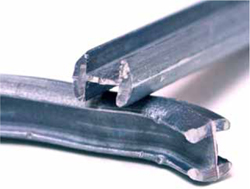
The use of came, a lead strip with a groove or channel to hold the glass, is the oldest method of making leaded glass (Fig. 1) It was developed hundreds of years ago and is the basic technique used in the leaded windows of Medieval cathedrals.