
New display jars from IndiaBy Mark Chevenka
New display jars from India
reproductions of globe, candy and sample shapesh
New glass display jars in a variety of shapes were made in India. The new jars attempt to copy specific vintage shapes and styles originally used from the mid-19th century through the 1920s. The new Indian jars have also been seen at antique shows, in online auctions, antique malls and outdoor markets.
One mail order firm offered the four different jars in Fig. 11 for $170 for the four-piece set. Original jars of the same size and shapes would sell for about $125 to $350 each.
Background of original jars
Many collectors and dealers commonly refer to all display jars as "apothecary" or "drugstore" jars. But that's not accurate; virtually none of these large decorative jars held drugs used in filling prescriptions. Although some of the large jars were certainly used in drug and apothecary shops, many more were used by a wide variety of other merchants particularly candy shops and soda fountains.
The true purpose of the majority of these fancifully shaped jars was to showcase and promote merchandise. In days when shoppers were used to buying bulk stock from dingy bins, barrels and crates, sparkling transparent crystal jars drew attention to special products and merchandise. The jars were intended to create impulse sales by artfully displaying the product in the most attractive way possible.
Bottles and jars which held drugs and chemicals for mixing prescriptions–the true apothecary jars–were far less fancy. Most were thick and chunky, made sturdy rather than elegant. Most were small enough to handle conveniently while measuring out the contents. Most were about quart-size for salts, powders and other solids; rarely more than one or two gallons for liquids. These common storage bottles were referred to as "shop furniture" or "shelf bottles" in the trade catalogs.
Display jars were generally used only for what their name suggests, "display." Other than candy, gum, natural sponges and a few other specialty goods, few retail products were purchased directly out of display jars. Materials displayed in the decorative jars were primarily to advertise what was available and entice impulse sales.
Tall thin display jars filled with colored oils, for example, might decorate a department store's perfume counter. Once attracted to the counter, customers would then purchase packaged products. You wouldn't pour the contents out of the large jars into small bottles.
Display jars were also an important part of trade shows and expositions. If your company sold, say, railroad cars of industrial chemicals, you wouldn't just heap a shovel-full of sulphur on a parlor table in your New York showroom. No, you'd tamp the stuff into a big fancy jar with lots of curves and stick the thing on a marble pedestal. Ditto for the coal tar and borax.
The decorative display jars are five to ten times more scarce than the ordinary jars and bottles used for storing drugs. The larger and more fanciful the display jar's shape, the higher the price. Display jars with unusual stoppers, especially large uniquely shaped stoppers are particularly prized.
Large ornate display jars should not be confused with show globes, also called show bottles. Show globes are glass vessels which held colored liquids and were the traditional symbol of apothecary shops. Typical show globes are made of stacking bottle-shaped vessels but may also be in the shape of a single large urn or a hanging sphere. But like a display jar, show globes were primarily an attention-getting device, not a dispenser or temporary storage container. Virtually all show globes were used in apothecary shops, but display jars were used in many businesses some of which were apothecary shops.
Separating old display jars from new
MOLD SEAMS–One of the best places to begin your examination of a display jar is at the mold seams. Original display jars were almost always made in two separate pieces. The base and body were formed in their own separate mold then joined together while the glass was hot. Since the base and body were made in separate molds, each piece has its own distinct mold seam. Mold seams of original bases don't generally align perfectly with the mold seams in original bodies.
Most reproduction display jars, though, are made quickly with the base and body formed as one piece in a single mold. This process produces one continuous mold seam running over the foot, through the stem and up the body of the jar (Fig. 15). Any display jars with such continuous mold seams are suspect.
The only exceptions are particularly small original display jars, under 10 inches, which some companies did make in a single mold. And there are the unusual instances when a seam on an original body, strictly by chance, lines up with the seam in the base. But as a general rule of thumb, any mold seam that runs in an unbroken continuous line along the body and base is a warning sign of a new jar.
BLACK LIGHT–Most display jars made in American before 1920 will fluoresce yellow-green under longwave black light. The larger the size of the black light, the more areas of the jar will fluoresce. Smaller lights will usually fluoresce only the thickest parts of a jar, usually the rims of the base and stopper. Larger lights will usually fluoresce bases, stopper rims and bodies. Generally, the older the jars the more intense the fluorescence.
The fluorescence is produced by manganese used in pre-1920 colorless glass as a decolorizing, or masking agent. Manganese masked iron impurities which caused green tints in clear glass. The great majority of new jars have no reaction under black light. Some will reflect a blue-white light produced by the black light, but do not have the yellow-green fluorescence of originals. While this test works on most jars, it is not a conclusive test. There are some exceptions as old glass formulas varied somewhat from factory to factory and from batch to batch within the same factory.
GLASS THICKNESS–Most new display jars are much thinner than the old jars they attempt to copy. The best place to observe the difference is in the top rim of the body.
The rim of a typical new globe display jar, for example, is shown in Fig. 16. The new rim is about one-eighth inch thick. The top rim of an similarly sized original globe display jar is almost four times thicker at about one-half inch (Fig. 17). Thickness is somewhat proportional to overall size so smaller original jars may be proportionately thinner.
If you have handled many old display jars, the differences in thickness will be obvious in the overall weight when you pick up a new jar. If you haven't had much experience with originals, generally be wary of any display jar over 12 inches tall with top rims less than one-quarter inch thick. Top rims are one of most rugged parts of old jars and were heavily reinforced to support the large decorative stoppers.
GROUND BASES–About half the jars from India have ground bases. Apparently the bases are so poorly made that it is necessary to grind the bases for the jars to stand properly. The grinding on our samples was around the entire bottom edge in about a one-quarter inch band (Fig. 20). Nothing like these broad ground rings are found on authentic originals.
Some original display jars that have seen heavy use over the years may show a circular pattern of normal wear on the base, but nothing as thoroughly ground or as wide as the bands on the new jars.
PATTERN DETAIL–Compared to original display jars, the molded detail in the new jars is very faint and flat. The pattern around the necks of the new and old jars in Figs. 18 and 19 show the differences very clearly. Note how shallow the thumbprints are in the new neck in Fig. 18. The band of thumbprints in the old jar stands almost one-half inch away from the neck. The waffle-like diamond pattern is also much higher and more distinct on the old jar than compared with the new pattern.
The shallow detail is a function of mold size. The larger and thicker the metal halves of the mold, the deeper the pattern. Original molds for even relatively modest sized pre-1920 jars are very heavy. The mold for a 16-inch jar might easily weigh 100 to 150 pounds or more. Most small Indian glass shops use very thin lightweight molds. The new molds are too thin to allow for much depth to the pattern.
The lack of pattern detail is most obvious around the necks of new jars, but may also appear in the stoppers and bases. The spiral ridges on the stoppers on the new bottles in Figs. 12 and 14, for example, are considerably rounder than the sharp-edged lines on original spiral stoppers.
STOPPERS–Perhaps the biggest misconception about dating jars is that stoppers must be ground to be old. This is not true. Most original display jars could be ordered with either ground or smooth-surfaced stoppers. Whether a stopper was ground or smooth depended on how it was originally intended to be used. To simply keep insects out and the dust off the products inside the jar, smooth stoppers were perfectly adequate. For tighter seals, ground stoppers were used. To make a jar perfectly air tight required a rubber gasket. These options are explained in the price lists and ordering information found in original catalog listings like the example in Fig. 24.
Original display jars with ground stoppers sell for more than display jars with smooth stoppers. This reflects the extra work and the higher price ground stoppers cost when originally made. Occasionally, new or old smooth stoppers will be "enhanced" by unethical sellers to create a ground stopper. This may range from simply roughing the surface with sandpaper in a home workshop to the use of professional glass shaping equipment.
Original ground stoppers were individually fit to jars. The stoppers to be used as ground stoppers were made oversize than ground down to fit. A worker would pick a stopper and a jar and alternately grind both the stopper and the jar opening–a process called lapping and honing–to create a perfect fit. When original ground stoppers are seated in their original matching jars, you can rarely turn the lid more than a couple of degrees. Not much more than one-quarter to one-half inch depending on the size of the stopper. Reworked stoppers rarely fit that tightly. Most reworks also fail to have the inside of the jar properly ground. Grinding on the inside of original jars will be as dense and as wide as the grinding on the stopper. The band of grinding on the jar should line up with the band of grinding on the stopper. If the ground areas are badly out of alignment, it often means a mismatched or reworked stopper.
Smooth original stoppers will fit snugly but not tightly. They can be turned easily while setting in the jar and have a slight amount of play or rattle. When placed in their original jars, though, most original smooth stoppers generally do not have more than a one-eighth to three-sixteenth inch gap between the stopper and the jar. The larger the jar, the wider the permissible gap. Gaps approaching one-quarter inch between stoppers and jars, though, are usually a sign of mismatched stoppers or new jars.
One of the unusual features of the new stoppers on the Indian jars is their weight. While the new jar bodies are almost one-quarter the thickness of old jars, most new stoppers are the same massive construction as original stoppers. Some new stoppers weigh as much or more as the new jar bodies. The differences are particularly noticeable when the stopper is removed and the thin-walled body is directly exposed.
There is also a considerable difference in color. The much thicker stoppers are less transparent than the thinner jars and appear much darker than the jars (Fig. 25). Original jars and stoppers are very nearly equally transparent and look virtually identical to one another. It would be very unusual to find an original jar whose transparency or color would vary much from its original stopper.
It may well develop that the biggest threat from the new jars is not the complete jar, but that the new stoppers may be married, or matched, to genuinely old jars. You can catch new match-ups by tests already discussed: use a black light, check the gap between stopper and jar and make sure the glass in the jar and stopper is a reasonable match.
MARKS–Although other glass containers such as prescription and patent medicine bottles are frequently marked with a company name, original display jars are rarely marked. Finding a company name or patent date on an original pre-1920 display jar is the exception rather than the general rule. But other types of reproduction glass, particularly kitchen glass, being made in India frequently have copyright and patent dates. The presence or absence of a mark is not a reliable test for dating display jars. The construction, physical properties and quality are much more important factors.
MAKERS & DISTRIBUTORS–Principal manufacturers (M) and major distributors (D) of original display jars include: Dean, Foster & Co., Boston, MA (M); Fox, Fultz & Webster (D); Illinois Glass Co., Alton, IL (M); Peter Van Schaack & Sons, Chicago, IL (M & D); Whithall Tatum, Millville, NJ (M).
When evaluating a display jar, never rely on any one single test to form your judgement of age. There is considerable variation among old originals. While the tests and general rules discussed here apply to the majority of old and new pieces, there are always exceptions.
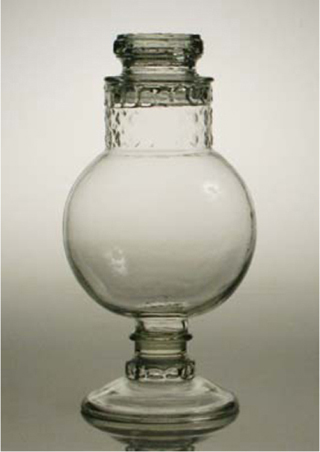
Fig. 1 New globe display jar from India. Dakota-type pattern molded around neck.
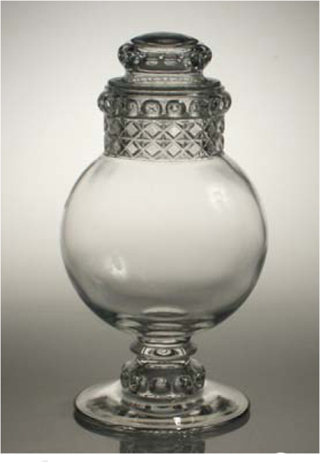
Fig. 2 Pre-1920 globe display jar made in America. Dakota-type pattern around neck.

Fig. 3

Fig. 4
Common apothecary jars and bottles for storing drugs, chemicals and other materials used to mix and compound prescriptions were called "shop furniture" or "shelf bottles" in the apothecary supply trade. Unlike display jars, ingredients were dispensed directly from these containers. A variety of jar shapes and mouth openings were available depending on the type of product to be stored and dispensed. These illustrations are from a bottle catalog of 1903-04.

Fig. 5 Group of show globes, also called show bottles. Show globes were filled with colored liquid, each stacking piece holding a different color. Show globes were the traditional trade symbol of apothecary shops through the end of the 19th century. Sizes range from 24 to 48 inches. Surfaces are plain or cut; some have colored overlays. Almost all show globes were blown.
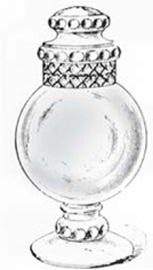
Fig. 6

Fig. 7
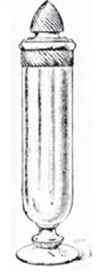
Fig. 8
Figs. 6-8 A sample of original display jars. Many original display jars have specialized names. Ball-shaped display jars like Fig. 6 are known as "globe" jars. Tall cylindrical display jars like Fig. 8 are called "sample" jars. Original jars came in a wide variety of sizes from 4-6 inches up to 30-40 inches.
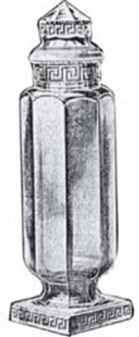
Fig. 9

Fig. 10
Figs. 9-10 Two display jars in especially unusual shapes with a Greek Key pattern. Manufacturers often gave their display jars exotic names. This series of jars has Greek-related names. Fig. 9, a sample jar, was originally sold under the name "Corinthian;" Fig. 10 was named "Trojan."

Fig. 11 A group of four new display jars from India. Sizes range from 10 to 16 inches. The new jars copy old original shapes and styles. Price for the set of four is $170.
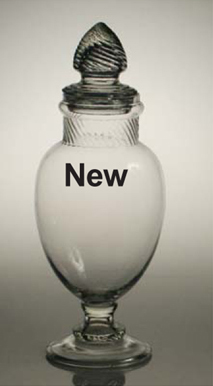
Fig. 12 New 16-inch jar with spiral pattern stopper, neck and pedestal ring
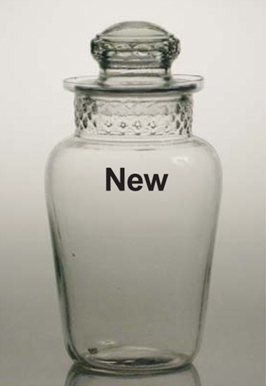
Fig. 13 New 10-inch jar with diamond pattern neck and thumbprint stopper
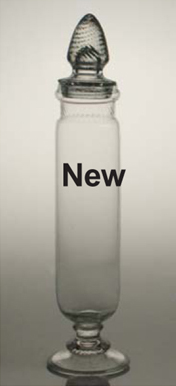
Fig. 14 New 14-inch sample style jar with spiral stopper and pedestal ring
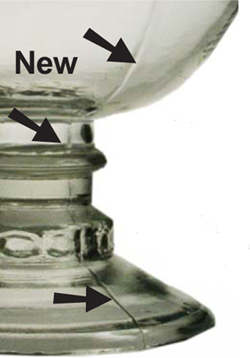
Fig. 15 Almost all reproduction display jars are generally made as one piece with one continuous mold seam running through the foot, pedestal and body of the new jar (arrows). Bodies and bases of most authentic pre-1920 display jars were made as two pieces. The mold seams in original jars seldom run in a continuous line across the base and body.

Fig. 16
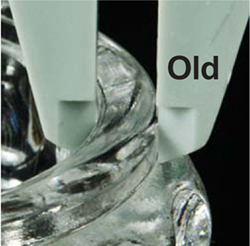
Fig. 17
Figs. 16-17 The top rims of the new display jars from India are much thinner than original display jars. Figs. 19 and 20 compare the top rims of the two globe display jars, Figs. 1 and 2, shown on the front cover. The new top rim is only about one-eighth inch thick, Fig. 16. The top rim of the original jar is almost four times as heavy, nearly one-half inch thick in the same area, Fig. 17.

Fig. 18 Close up view of the poor detail in the pattern-molded neck of the new globe display jar shown in Fig. 1. Note the very shallow thumbprints and faint diamond pattern.
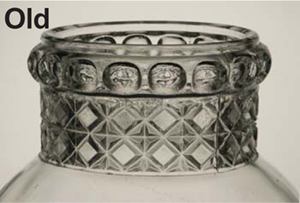
Fig. 19 The pattern-molded top rim in the original globe display jar shown in Fig. 2. Note the deep clear thumbprints around the top rim and the distinct diamond pattern below.
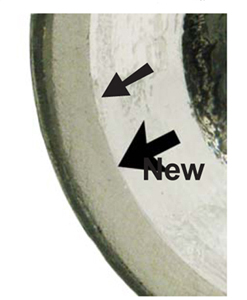
Fig. 20 The bottom rims on about 50-75 percent of the new display jars are ground to make them stand correctly. Grinding is usually at least one-quarter inch wide. Old jars occasionally have rings of normal wear on bottom rims which may appear slightly frosted but nothing as dense or as wide as the grinding found in the new jars. All the grinding in our examples ran along the entire outer rim of the base.
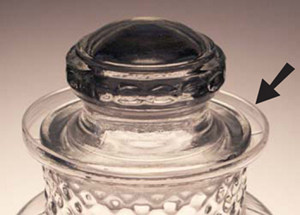
Fig. 21 Some stoppers on new display jars are set down below the top rim. This is very unusual and is a warning sign of a new display jar. Generally, old stoppers used in vintage display jars set on top of the rim, not below it (see Fig. 22). Remember, this rule applies to display jars. Keep in mind that some large storage bottles like those in Figs. 3 and 4 may have stoppers recessed below the rim.
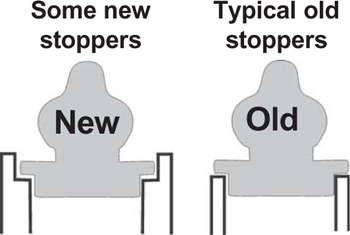
Fig. 22 Cross section illustration of stoppers on display jars. Generally, stoppers in old display jars set on top of the rim, right. A number of the new display jars have stoppers which fit down inside the rim, left. Keep in mind this rule applies to display jars. Some storage jars may have stoppers recess below the rim.

Fig. 23 Beware of poorly shaped top rims. This new rim is very uneven with almost a quarter-inch difference in height from one side to the other. Original rims are almost always nearly perfectly square and level across the entire rim.
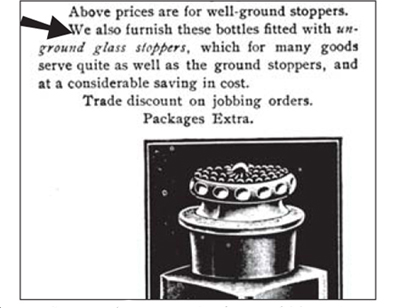
Fig. 24 Stoppers for old display jars could be ordered either ground or smooth as shown in this copy of an original catalog. Although most stoppers on new display jars are smooth, genuinely old stoppers may also be smooth.
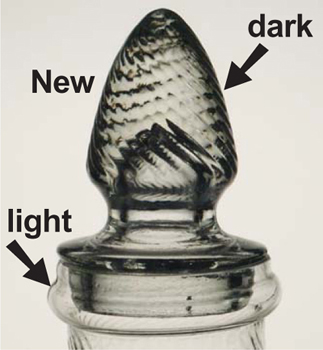
Fig. 25 Many new jars, like this example, have extremely heavy and thick stoppers. The heavy new stoppers are less transparent than the much thinner new jars. The reduced transparency makes many new stoppers appear much darker than the more transparent jars. Glass in original stoppers and jars are nearly identical in clarity and transparency.
 — the award-winning marketplace trusted by collectors worldwide.
Now that you know what to avoid...
♥️ Find the Real Deal on Ruby Lane
Shop with confidence from our vetted dealers who specialize in authentic vintage and antique treasures.


