
Reproduced Jeannette Glass Iris Coasters - Iris and HerringboneBy Mark Chervenka
Reproduced Jeannette Glass Iris Coasters - Iris and Herringbone
A clear crystal coaster of the Iris pattern has been reproduced. Original Iris was made by the Jeanette Glass Company. The original factory name was Iris but it is now commonly called Iris and Herringbone.
The pattern was first made in clear crystal ca. 1928-1932. A limited number of shapes were made in crystal in the 1950s and vases were produced into the 1970s.
Other shapes which have been reproduced include beaded edge 4½″ berry bowl, 6½″ footed tumblers, 10" dinner plate, vase and candy dish. The new candy dish is easy to spot because there is no raylike pattern in the bottom of the piece. Vases were reissued in the 1970s and are the same as vases produced in earlier years.
Generally, molding on originals is much sharper and crisper. This means the original herringbone pattern catches more light and typically has more sparkle and appears brighter than the reproductions.
Coaster
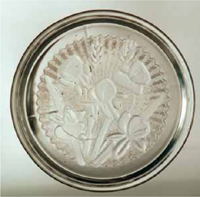
Fig. 1 An original Iris coaster valued at $90-$110
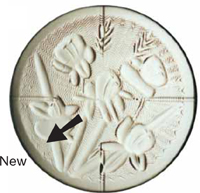
Fig. 2 The pattern in new coasters is weak overall but fades away almost completely in the lower left (6 o'clock to 8 o'clock) position. As viewed from above.
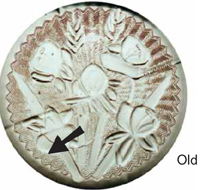
Fig. 3 The herringbone pattern in all old coasters forms a sharp border for a full 360° around the iris in the center. Coaster shown as viewed from above.
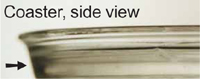
Fig. 4 The new coaster has a much thicker bottom, about one-quarter inch thick.
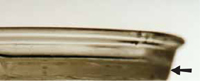
Fig. 5 The old coaster has less glass in the bottom, not quite three-sixteenths inch thick.
Dinner plate
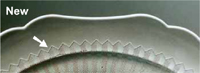
Fig. 6 The outer most edge of the pattern in new 10" dinner plates is formed by an unbroken ring of sharp points with the point facing the outer rim of the plate.
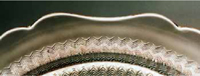
Fig. 7 The outer most edge of the pattern in old plates is a series of groups of points. The groups of points in old plates face towards center of the plate.

Tumbler, 6½″ footed
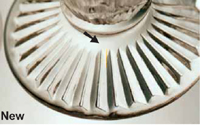
Fig. 8A In new tumblers, there is a distinct gap between the end of the ray and the ring around the center of the foot.
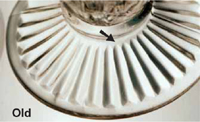
Fig. 8B In old tumblers, the rays extend almost to the center ring.
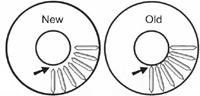
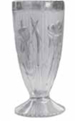
Fig. 9 The pattern on both old and new 6½″ footed tumblers appears twice around the sides–once on the front and again on the back. The pattern is identical front and back in the old tumbler. The pattern in new tumblers is different from front to back.
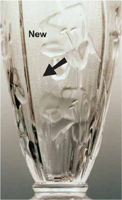
Fig. 10 Only one side of the new tumbler has a pointed leaf behind the lower flower bud. The second side, as shown above, does not have the pointed leaf.
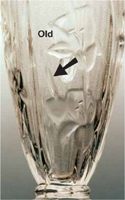
Fig. 11 The pointed leaf behind the flower bud appears on both sides of the original tumbler.
Berry dish, 4½″
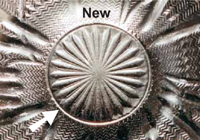
Fig. 12 The hobstar in the bottom of the new bowl has a distinct circular line-like crease around the edge (white arrow). A fingernail will easily fit into the crease. As viewed from outside bottom.
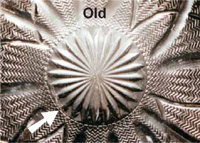
Fig. 13 The hobstar in the bottom of the old bowl is not surrounded by a line or crease. A circle is formed where the herringbone pattern stops and the smooth glass begins. As viewed from outside bottom.
 — the award-winning marketplace trusted by collectors worldwide.
Now that you know what to avoid...
♥️ Find the Real Deal on Ruby Lane
Shop with confidence from our vetted dealers who specialize in authentic vintage and antique treasures.


