
Avoiding New Cut GlassBy Mark Chervenka
Avoiding New Cut Glass
Fine cut glass has been a mark of elegance and luxury for centuries. Sparkling reflections off brilliant crystal seem to be admired by the public at large, not just those who are interested in antiques. This widespread popularity has made cut glass one of the most popular and longest running sellers of antique reproduction wholesalers and importers.
New cut glass has been brought into the United States in large amounts since World War II. It continues to be imported in large quantities and occupies two or more pages in almost all the catalogs and brochures of antique reproduction wholesalers. New cut glass is so widespread at shows, auctions, shops and malls, that even experienced dealers and long time collectors may have trouble telling new from old.
The majority of cut glass reproductions sold today try to imitate the general appearance of authentic cut glass from the so-called American Brilliant Period, a span of years from about 1880 to shortly before World War I. During this time, American cut glass was the finest in the world. It was made of the highest quality glass and cut with the finest and most imaginative patterns. Nearly the entire surface was cut or decorated. New patterns and polishing techniques gave the glass never before seen sparkle and reflections which lead to the name "brilliant". Unless specifically stated otherwise, all references in the article to authentic glass will mean cut glass of the American Brilliant Period. This term will appear abbreviated as ABP.
This article provides you with basic guidelines to avoid the majority of new cut glass in the market today. The focus is on mass produced reproductions made to imitate genuine cut glass in the $50 to $1,000 range. Individually made elaborate forgeries of rare and expensive cut glass over $1,000 will not be included (although some of the same guidelines apply).
The new mass produced cut glass can generally be detected by tool marks, composition of the glass (detected by black light), certain basic shapes, cutting techniques and wear marks. But before discussing these features in detail, it is important to have an understanding of how all cut glass, new or old, is made.
How cut glass is made
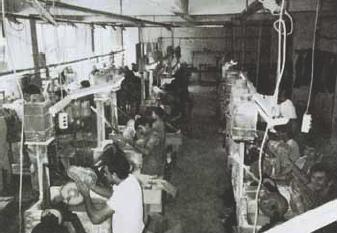
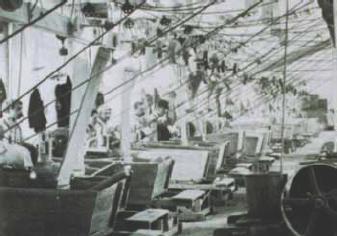
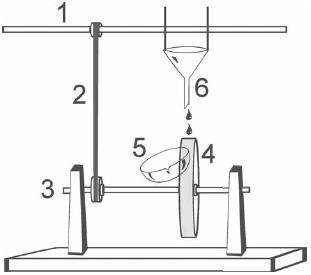
The equipment used for glass cutting has remained essentially unchanged for hundreds of years. Workers stand or sit in front of a revolving wheel which is used to remove the unwanted glass. This arrangement of wheel and shafts, regardless if it is on the floor or bench mounted, is called a cutting frame (Figs. 1-4).
About the only difference between present day cutting frames and those of the 19th century is how they are powered. Nineteenth century cutting wheels were primarily driven from an overhead shaft running the length of the workshop and turned by a centrally located steam engine. Modern wheels are powered by electric motors located at each cutting frame.
When the glass is being cut, it is held above the wheel (Fig. 5). Cuts are made by pressing the glass down on the wheel. The wheel cuts the back or side opposite of the glass cutter. In other words, the glass cutter must look through the piece being held to guide it over the wheel. Glass engraving is different from glass cutting. In the engraving process, the glass is below the wheel; the glass is brought up to the wheel to make the cuts (Fig. 6).
Separating old and new
WHEEL MARKS
Whether done 100 years ago or yesterday, glass cutting involves only three basic steps: 1) rough cutting, 2) smoothing and 3) polishing. Rough cuts on authentic American Brilliant Period glass were made with steel or iron wheels with abrasives dripping down from a hopper above the cutting frame (see part #6, Fig. 4). The cuts were then smoothed at stone wheels and then polished.
New cut glass, by contrast, is mass produced with high speed diamond wheels. These wheels, embedded with industrial diamonds, cut 10 to 20 times faster than the old iron and steel wheels which used dripping abrasives. In tests and demonstrations sponsored by the American Cut Glass Association, even elaborate ABP patterns were produced in only a couple hours time using diamond wheels. Most new glass cut with diamond wheels goes directly to polishing and finishing after its first cutting. The smoothing step used in ABP pieces is generally eliminated in present day reproductions.
The good news is that the diamond wheel also leaves easy to recognize marks on new cut glass. Diamond wheels cut so quickly and easily that modern cutters can generally make even long cuts in one pass. This produces virtually continuous unbroken parallel ridges and grooves the length of the cut (Figs. 7, 9 & 10). The areas between the ridges also frequently have a pebbled or textured appearance. In the vast majority of new cut glass, these marks are never polished out and remain in the finished piece when it is offered for sale. These marks can be seen by the unaided eye but are easier to study with the aid of a magnifying glass or 10X loupe.
Old ABP glass cut with iron and steel wheels, on the other hand, may show some faint cutting lines but not the prominent ridges left by modern diamond wheels. Virtually all traces of tool marks have been polished out of ABP glass. If there are some faint lines present in ABP, they tend to be short and broken because they are the result of multiple passes not long continuous passes as with diamond wheels (see Figs. 8, 11).
Diamond wheels were not in existence until World War II when they were developed to speed up production of war goods. Any piece cut with a diamond wheel could not possibly be from the ABP and must logically have been made in the second half of the 20th century. While it is possible to polish out ridges left by diamond wheels, the added labor expense generally takes away any profit gained from selling the piece as genuine ABP. Besides, there are several additional guidelines to help detect new cut glass besides marks left by cutting tools.
TEETH
Virtually all objects we now admire as antiques were originally made to be used in daily living and cut glass is no exception. Although we now admire ABP cut glass for its decorative value, we often forget its original practical function was to serve lemonade, hold sugar or contain a pile of mashed potatoes. Authentic ABP cut glass logically had to withstand reasonable handling, washing and storage.
In contrast, almost all reproductions are made as decorative objects; after all, they're antiques, right? Their new construction and design are almost always illogical with the function or purpose of the original antique they seek to imitate. This is most obvious with the teeth in cut glass reproductions.
Teeth on new cut glass reproductions are almost always cut to dagger like points (Figs. 12, 14 &15). Whether tall, wide, short or deep, all the new teeth come to very sharp points. This style is a characteristic of new East European cut glass and was never used on ABP cut glass. Authentic ABP teeth are rounded or squared off; some are even painstakingly blunted with mitres ground on teeth edge by edge (Fig. 17).
Teeth on original ABP are blunted for two very practical reasons: safety and appearance. Sharp points on teeth would knock off at the slightest touch with a ladle or serving spoon sending chips of glass into the strawberries or ice cream. After a couple of dinners, the chipped and missing points would look a sorry sight indeed. Designers of original cut glass prevented those problems by eliminating sharp teeth. Even those original teeth which appear pointed are seen to be blunted when viewed under magnification.
SIGNS OF NORMAL WEAR
Another feature of genuine ABP cut glass hard to duplicate in new cut glass is normal wear. In other words, if a piece of glass is represented as being 100 years old, it should logically show some evidence of that age. Decanters, cruets, jars, etc., should show wear where the stoppers and lids rest on the body. Serving pieces such as bowls, trays, relishes, etc. should show wear on inside bottoms as well as on their bases or feet. Even essentially stationary pieces such as vases and candlesticks had to be cleaned or dusted and should show some wear on the base or feet.
Normal wear appears as lines of random width, direction, depth and length (Fig. 20, 21). Normal wear occurs over many years with each bump, knock or jiggle an entirely separate event producing unique appearing marks (a scratch, chip, scuff, etc.). The only source of repeated wear should be at a point of constant contact such as a foot or a high spot on the bottom of a bowl for example. Areas of repeated wear in genuinely old pieces tend to show up as frosted patches or spots. Under a 10X loupe, you can see that even these areas are formed by many (tiny) random scratches
Artificial wear, because it is generally applied all at one time, almost always shows a definite pattern. Moving an object back and forth over a rough surface for example, produces a pattern of parallel lines (Fig. 18). Twisting an object produces a pattern of concentric circles (Fig. 19). Tools, such as a wire brush or rough grinding wheel, will also leave a definite repeated pattern. If the majority of scratches seem to run the same direction, are about the same depth and run about the same length, it is almost a sure sign of artificial aging.
Although it is possible to find a genuinely old piece that has been "put away" and shows no wear, it is not likely. Protect yourself by using as many of the guidelines listed in this article as you can as a cross check.
SHAPES
Genuine ABP cut glass was made in literally thousands of shapes. Rather than try and learn authentic shapes, you would be better off learning to recognize a few shapes that are almost a virtual guarantee of a reproduction.
Probably the easiest shape to recognize as new is the so-called "helmet" shaped one piece basket (Fig. 22 next page). This is an East Europe shape virtually never used in ABP. It is, however, almost the only basket shape shown in antique reproduction wholesale catalogs since the late 1940s. ABP baskets were made of two pieces of glass with a separate handle applied to the body. Only a handful of authentic ABP baskets are known to exist in the helmet shape; they are exceedingly rare costing thousands of dollars. As a general guideline, then, all helmet shaped cut glass baskets should be considered new.
Another shape that must be on the wholesaler's best sellers list is the so-called "biscuit jar" (Fig. 24). Like the helmet basket, this veteran has appeared unchanged in the catalogs since the late 1940s. It is basically a straight sided cylinder 8"-10" high with a flat lid. The lid is fitted with a solid glass knob; an inner rim fits down into the base. This shape is a totally new design; no similar shape in these large dimensions was ever used during the ABP.
The closest similar shape in genuine ABP cut glass was the cigar jar two of which are shown in Figs. 25 & 26. Although these jars have the straight sided cylindrical shape, note that their knobs are wide and hollow not round and solid like the new biscuit jar.
BLANKS
In general, blanks of new cut glass show much more variation in thickness within a single piece than old blanks. This is especially noticeable in plates, tumblers and some bowls; the smaller the size, the more noticeable the differences. Many bottoms of new tumblers and plates are frequently twice the thickness as old blanks of similar shape (Figs. 27-28). The center of the new thicker blanks also frequently, but not always, forms a high spot. There is some debate as to exactly why this occurs. Some persons believe the extra thickness is a deliberate attempt to make new glass more closely resemble the weight of old. Others believe that ABP standards were higher and the irregular thickness of new pieces only proves poor quality.
DETAILS
Other clues to a reproduction are found in small details. Bubbles, pin head size and larger, for example, are rarely found in ABP cut glass but are fairly common in new cut glass. Large bubbles in old blanks caused the piece to be discarded or the pattern was deliberately cut over the bubble to hide it. Patterns should also remain within logical boundaries. In Fig. 29, the new cutting has been extended too far and has been chopped off by the saw tooth rim. Such poor work wouldn't have been tolerated in the ABP. Neither would the sloppy new cutting shown in Fig. 30. Note that six of the rays in the small star cross over other cuttings. Irregular shapes, unbalanced patterns and cross over cuttings are all signs of new work.
BLACK LIGHT TEST
All authentic ABP cut glass fluoresces lime yellow under long wave black light. Small lights of low wattage may only fluoresce rims and bottoms; larger more powerful lights will fluoresce larger areas. The darker the general lighting, the more obvious the fluorescence.
Until recently, most cut glass reproductions fluoresced pink, purple, white or appeared to have no reaction. Now, new cut glass made in Turkey has begun to fluoresce a yellow green very similar to the lime yellow of authentic ABP glass. Five samples from Turkey ACRN purchased fluoresced this confusing yellow green. Therefore don't rely on black light alone as a test of age.
SIGNATURES
Never base your judgement of age or attribution to a factory on marks. Fake and forged acid signatures and marks are widespread in cut glass and used on both new and genuinely old pieces. It is much more accurate to base your determination of age and quality on the construction details of a piece as listed in this article rather than marks.
Summary
The potentially confusing fluorescence of the Turkish glass proves that buyers must never rely on only one test to determine age. As many tests as possible should be used before making a judgement as to age. The most important clues to a possible reproduction are: 1) grooves left by a diamond wheel; 2) lack of normal wear inside and out; 3) teeth cut to sharp points; 4) shapes that were never made during the ABP; 5) blanks with illogically thick areas; and 6) obvious flaws in the blank and irregularities in patterns, and 7) incorrect fluorescence. Keeping these basic points in mind should help you identify most cut glass reproductions in the market today.
Glass cutting shop 1990s
Fig. 1 These present day glass cutters in Turkey make antique reproductions. Their basic equipment is similar to that used 100 years ago (see Fig. 2).
Glass cutting shop 1890s
Fig. 2 The modern Turkey shop isn't much different from the Dorflinger cut glass factory (above) of 100 years ago in White Mills, Pennsylvania. Courtesy Antique Publications Dorflinger, Americas Finest Glass 1988, J. Feller. Marietta OH.

Fig. 3 Illustration of 19th century glass cutters at their work stations called "cutting frames". From Curiosities of Glass Making written by English glass master Apsley Pellatt in 1849.
Typical cutting frame
Fig. 4 Cutting frame with iron or steel cutting wheel. 1. Overhead drive shaft running through workshop; 2. belt carrying power to wheel shaft; 3. wheel shaft; 4. cutting wheel; 5. glass being cut on wheel; 6. hopper holding water and abrasive.
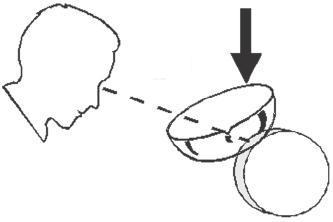
Fig. 5 Glass Cutting
The glass is held above the cutting wheel. The worker looks through the glass to control the cutting on the wheel. Glass is pressed down on the wheel.
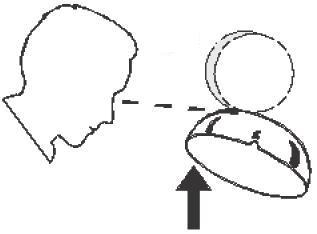
Fig. 6 Glass Engraving
Wheel is above glass. Work is brought up to wheel. Engraving wheels are generally much smaller than cutting wheels.
Marks of cutting wheels
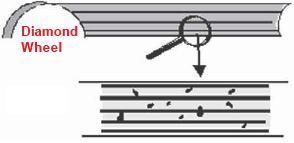
Fig. 7
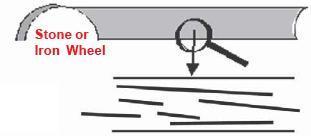
Fig. 8
Figs 7 & 8. Marks left by cutting wheels may be seen by the unaided eye but are easier to see with a magnifying glass or loupe. Modern diamond cutting wheels leave long parallel ridges or grooves in new cut glass. The areas between the ridges often have a textured or pitted appearance. Old ABP glass cut with iron and steel wheels may show faint lines but cuts are generally very smooth. If there are slight lines, they tend to be short and choppy, not long and continuous straight unbroken lines left by new diamond wheels.
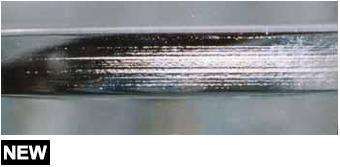
Fig. 9 Close up of grooves and rough surface made by diamond wheel. Shown about 2½ times actual size.
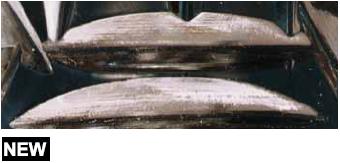
Fig. 10 Close up of grooves and rough surface made by diamond wheel. Shown about 2½ times actual size.
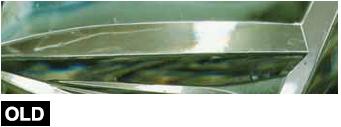
Fig. 11 Close up of smooth cut in old glass made with iron or steel wheel. 3 times actual size.
Teeth styles
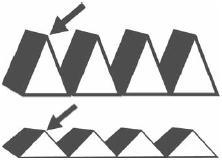
Fig. 12 Teeth on cut glass reproductions are almost always cut to sharp points. Whether tall, wide, short or deep, new teeth are very pointed with no trace of grinding or blunting.
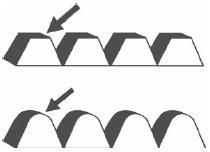
Fig. 13 Authentic ABP teeth are rounded, squared off or mitered. It is very rare for any ABP piece to have sharp pointed teeth in the rim.
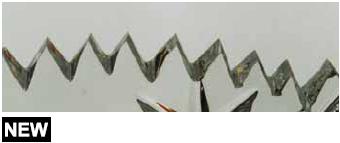
Fig. 14 Pointed teeth on new pitcher; twice actual size.
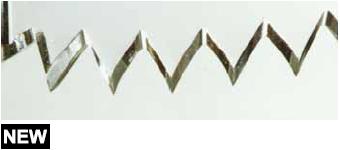
Fig. 15 Pointed teeth on new plate, twice actual size.
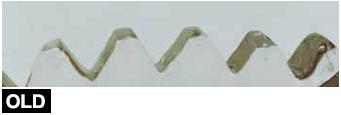
Fig. 16 Typical old blunted teeth; twice actual size.
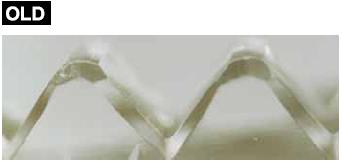
Fig. 17 Close up of grinding on old teeth; a sign of intensive hand labor. On some but not all ABP.
Artificial wear
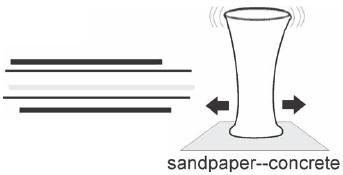
Fig. 18 Moving an object back and forth on a rough surface produces parallel lines of wear.
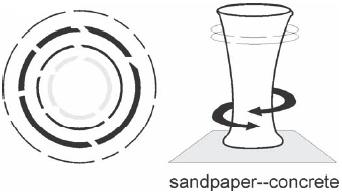
Fig. 19 Twisting an object on a rough surface produces wear lines that appear like radiating (concentric) circles.
Normal wear
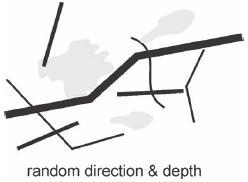
Fig. 20 Scratches from normal wear are random in depth, direction, width and length.

Fig. 21 Close up photo, normal wear. Note random depth, directions, widths and lengths of scratches. Wear should appear both inside and outside of genuinely old cut glass.
New shapes

Fig. 22 9 × 6" one piece helmet shaped basket. This is an East European shape; essentially never used in America.
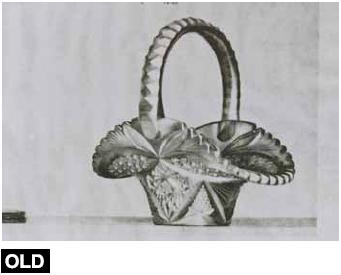
Fig. 23 Almost without exception ABP baskets are two pieces as above: a separate body with an applied handle.
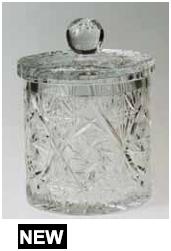
Fig. 24 New biscuit jar. 6½" dia; 9" tall.
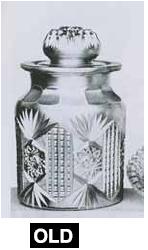
Fig. 25 Cigar jar; wide hollow knob
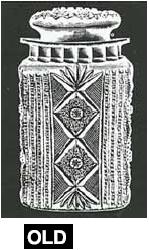
Fig. 26 Cigar jar, wide hollow knob
The new cylindrical "biscuit jars" offered by reproduction wholesalers have no ABP counterpart. The closest ABP similar shape is a cigar jar. Genuine cigar jars are identified by their wide hollow knobs used to hold a moist sponge.
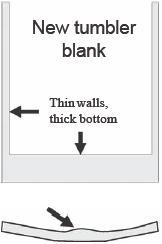
Fig. 27 New plate blank
Many new plate blanks are often twice as thick as old plate blanks. Most new plate blanks have raised centers (arrow).
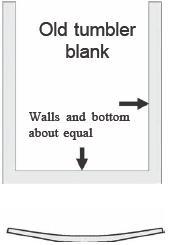
Fig. 28 Old plate blank
Details of quality, pattern & cutting

Fig. 29
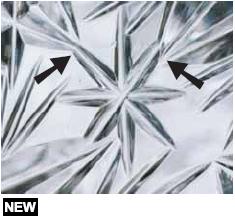
Fig. 30
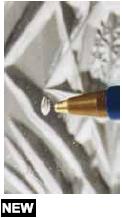
Fig. 31
Figs. 29-31 Poorly planned typical new cutting running out beyond rim shown in Fig. 29. Badly shaped star in Fig. 30 crosses other cuttings in six places. Pin head size or larger bubbles, Fig. 3s are common in new glass but rarely found in authentic ABP cut glass.

Fig. 32 New cut glass from the Czech Republic. L-R: 8" basket, 12" bowl, 8" basket. Wholesale prices $73-$110.

Fig. 33 New cut glass from the Czech Republic. L-R: 10" bowl, 10" vase, 10" bowl. Wholesale prices, bowls $106; vase $60.

Fig. 34 New cut glass from the Czech Republic. L-R: 8" vase, 10" vase, 12" vase.

Fig. 35 New cut glass from the Czech Republic. L-R: 12" vase, 10" vase, 8" vase, 9" vase.
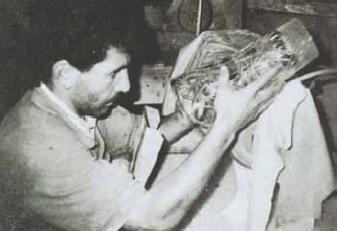
Fig. 36 A glass worker producing new cut glass in a factory in Turkey in the late 1990s. The worker presses the glass blank down on the cutting wheel.
 — the award-winning marketplace trusted by collectors worldwide.
Now that you know what to avoid...
♥️ Find the Real Deal on Ruby Lane
Shop with confidence from our vetted dealers who specialize in authentic vintage and antique treasures.


